
How to Restore Hardened, Darkened Aniline Leather After Improper Cleaning.
Posted by Roger Koh on 14th Feb 2026
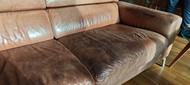
Leather can become dramatically darker, stiff, and uneven after well-intentioned cleaning attempts. This case study from Germany illustrates a common problem: an aniline leather sofa misidentified as semi-aniline, cleaned using conventional products and hard tap water.
The result? Oil saturation, mineral contamination, structural fatigue, and UV fading — all at once.
Let’s break down what happened and how to restore it properly using a Fiber-First Restoration approach.
The Problem: What Went Wrong?
The client attempted to clean the sofa using standard aniline leather care products and regular Berlin tap water (high in limescale). Over time, this led to multiple structural issues:
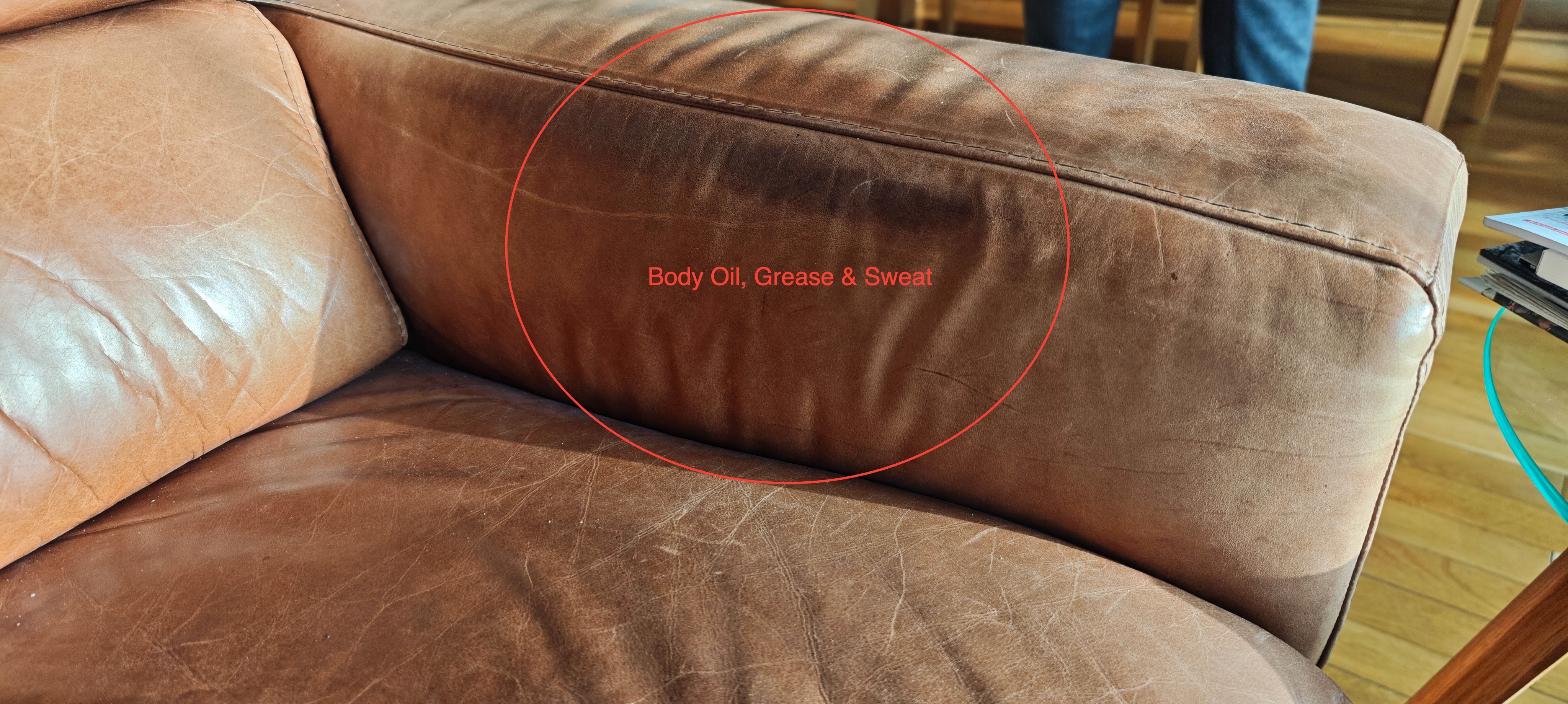
1. Oil, Sweat & Grease Saturation
Darkened seating and handrest areas indicate deep body oil migration. These oils compress fibers and create surface glazing, making leather feel stiff and unnaturally slick.
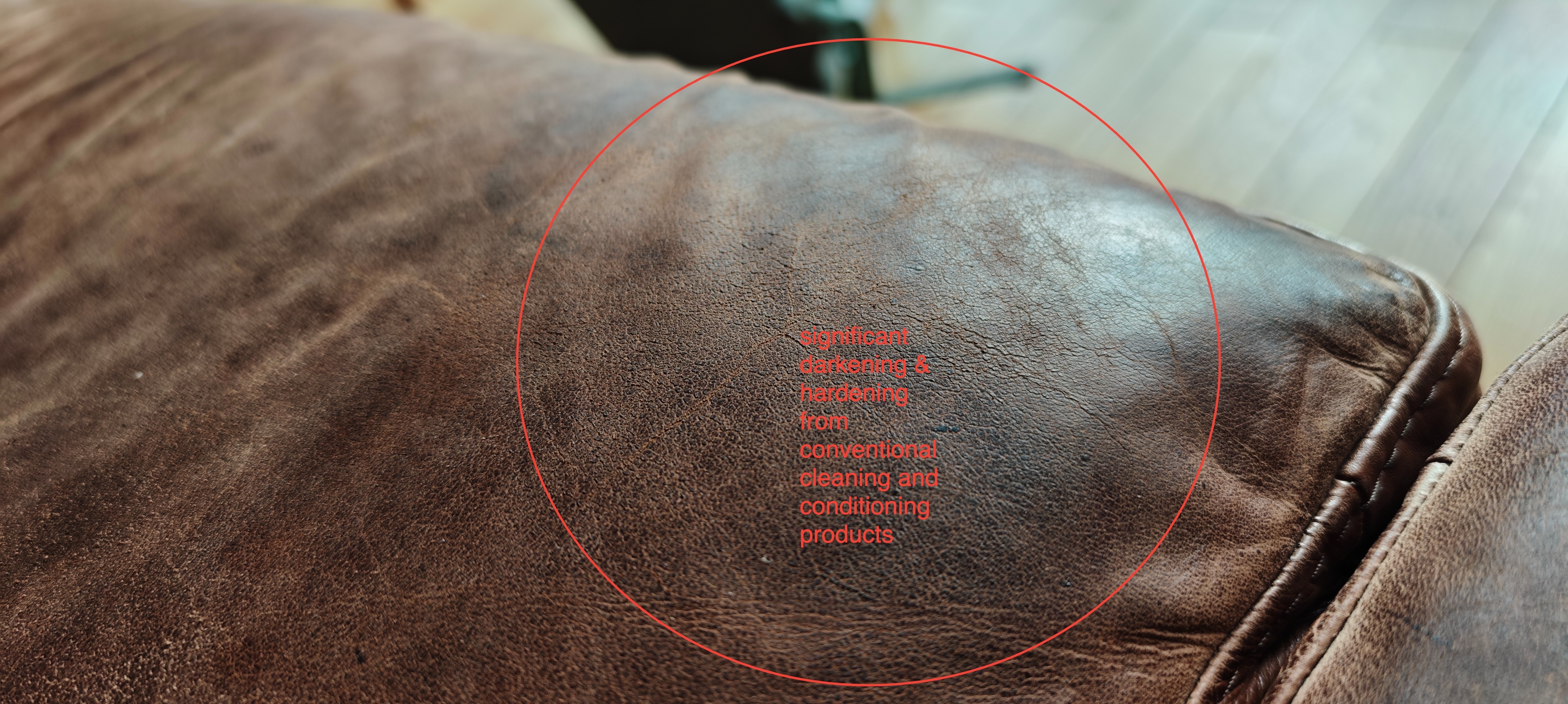
2. Hard Water Mineral Contamination
Berlin tap water contains calcium and magnesium. When used repeatedly on leather, mineral residues can bind with detergent and oil residues, causing rigidity and surface drag.
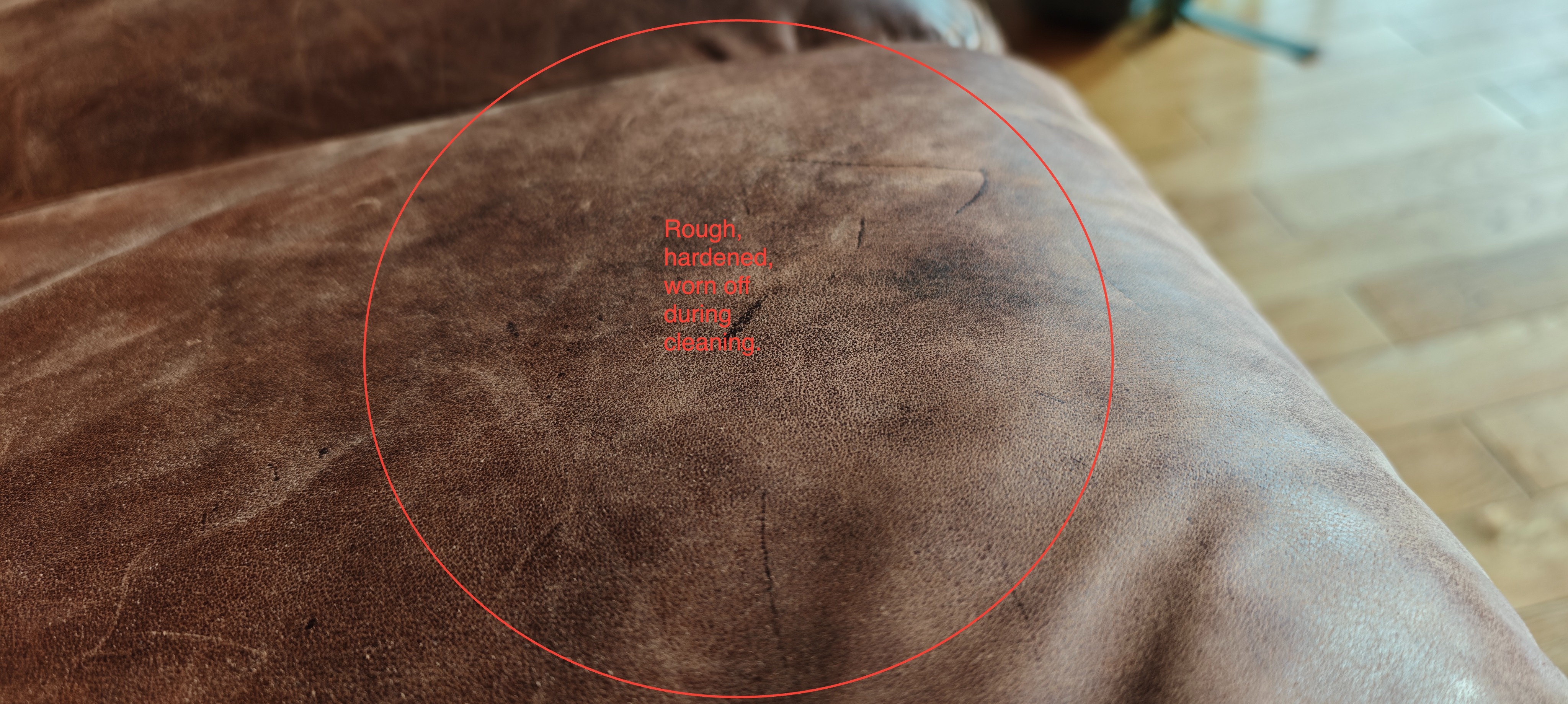
3. Fatliquor Depletion
Cleaning without replenishing internal lubricants removes natural oils, leaving fibers dry and prone to overstretching and hardening.
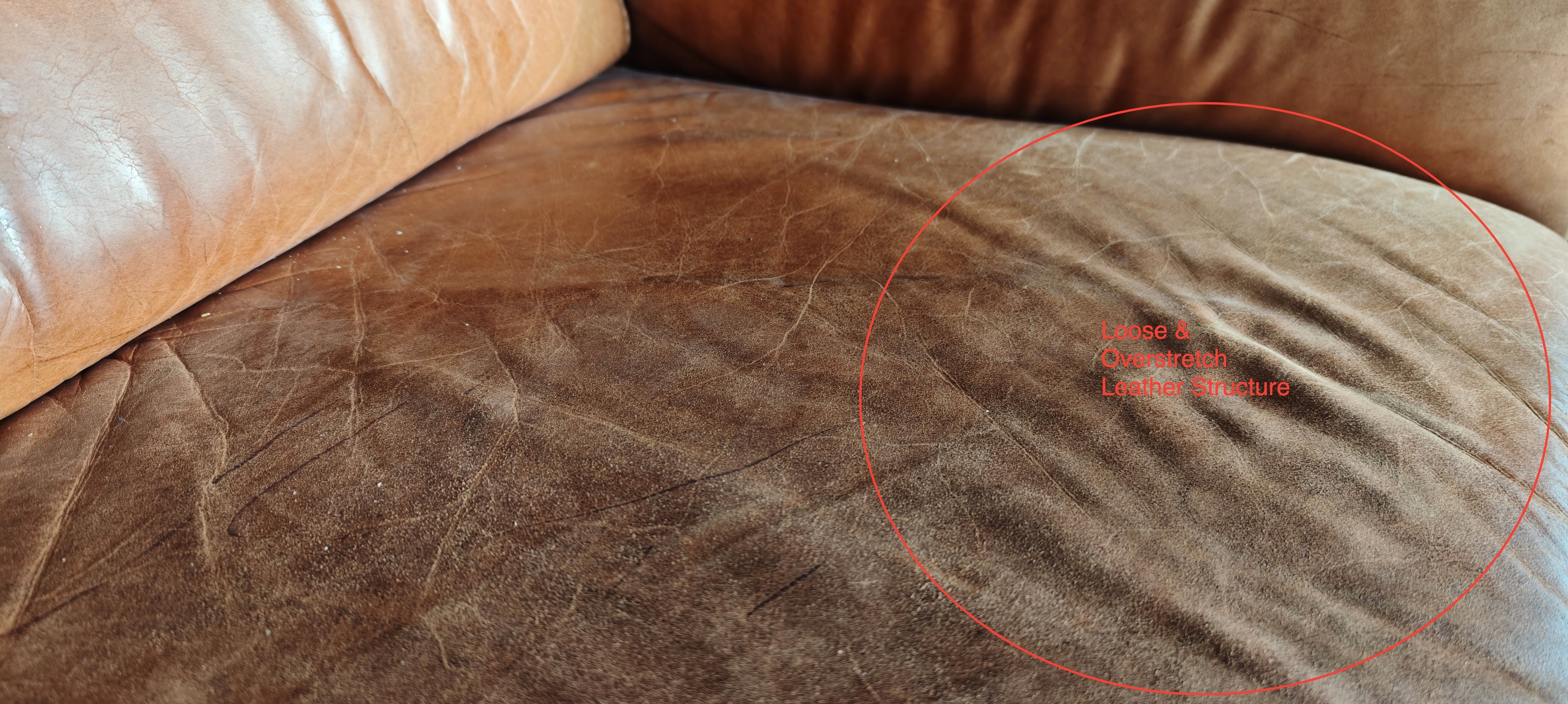
4. Loose & Overstretched Structure
Long-term compression without proper internal lubrication causes seat panels to wrinkle and collapse.
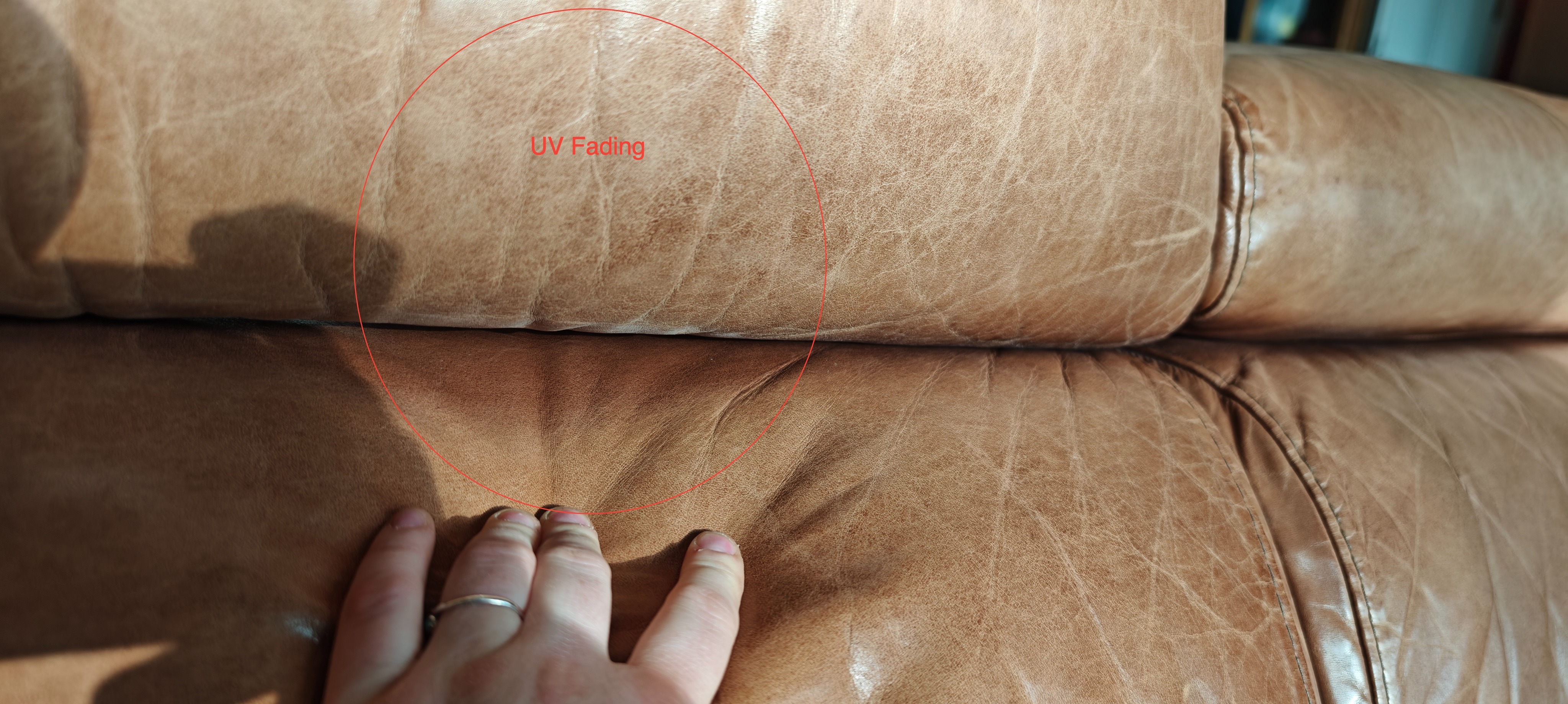
5. UV Fading
The upper panels showed clear photodegradation, fading from the original intensity.
Why “Clean and Reseal” Is the Wrong Approach
Applying a new finish or heavy coating over contaminated and dehydrated leather will:
-
Lock in oils and residues
-
Increase stiffness
-
Accelerate cracking
-
Mask unresolved structural damage
Aniline leather requires internal correction before cosmetic correction.
The Leather Doctor® Fiber-First Restoration Strategy
For aniline leather with oil saturation, mineral contamination, and structural fatigue, follow this 9-Step System:
Step 1 – Decontamination
Leather pH Balanced Degreaser 2.2
Leather Rinsing Conditioner 3.0
Removes oil, sweat salts, grease, and mineral residues safely.
Step 2 – pH Stabilization
Leather Acidifying Conditioner 2.0
Restores the leather’s natural acidic range and prevents rawhide reversion.
Step 3 – UV Fade Correction
Rebuilds translucency and blends faded areas back toward the original tone.
Step 4 – Fiber Relaxation
Leather Hydrating Conditioner 3.3
Relaxes compressed collagen fibers and rebalances internal moisture.
Step 5 – Structural Re-Lubrication
Leather Fatliquoring Conditioner 5.0
Restores suppleness, flexibility, tensile integrity, and resilience.
This is the backbone of aniline restoration.
Step 6 – Controlled Drying & Reset
Allow natural drying to permit fiber realignment and even lubrication distribution.
Step 7 – Tonal Evening (Optional)
Used when a darker overall tone is desired, or color differences need harmonizing.
Step 8 – Protective Sealing
Aniline Finish Topcoat Gloss 76
or
Aniline Finish Topcoat Matte 50
Breathable protection that prevents crocking without masking natural grain.
Step 9 – Rub-Resistant Feel Calibration
Gloss System:
Matte System:
This final step restores tactile harmony and improves rub resistance.
When Is Step 9 Mandatory?
Rub-resistant conditioning becomes mandatory when:
-
A new topcoat is applied
-
Dye coating alters surface tension
-
Surface friction feels inconsistent
-
High-contact seating areas are involved
-
The client expects a specific “buttery” or “waxy” feel
If surface chemistry is altered, Step 9 must complete the system.
Key Takeaway
Aniline leather restoration is not about hiding damage.
It is about correcting the fiber imbalance before cosmetic correction.
The correct order is:
Decontaminate → Stabilize → Correct Color → Relax → Lubricate → Reset → Tone → Protect → Calibrate
That is the Leather Doctor® Fiber-First principle.
If your aniline sofa has become darkened, hardened, faded, or uneven after cleaning attempts, avoid overcoating. Restore the structure first.
Explore Leather Doctor® Aniline Restoration Products →