
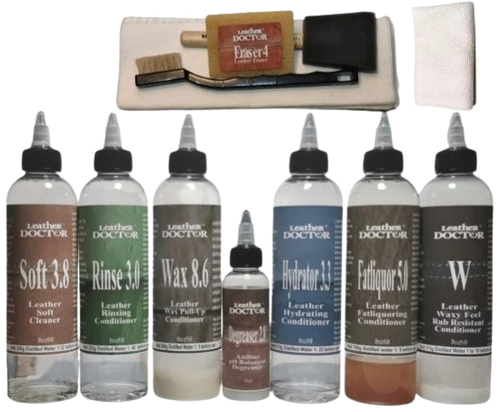
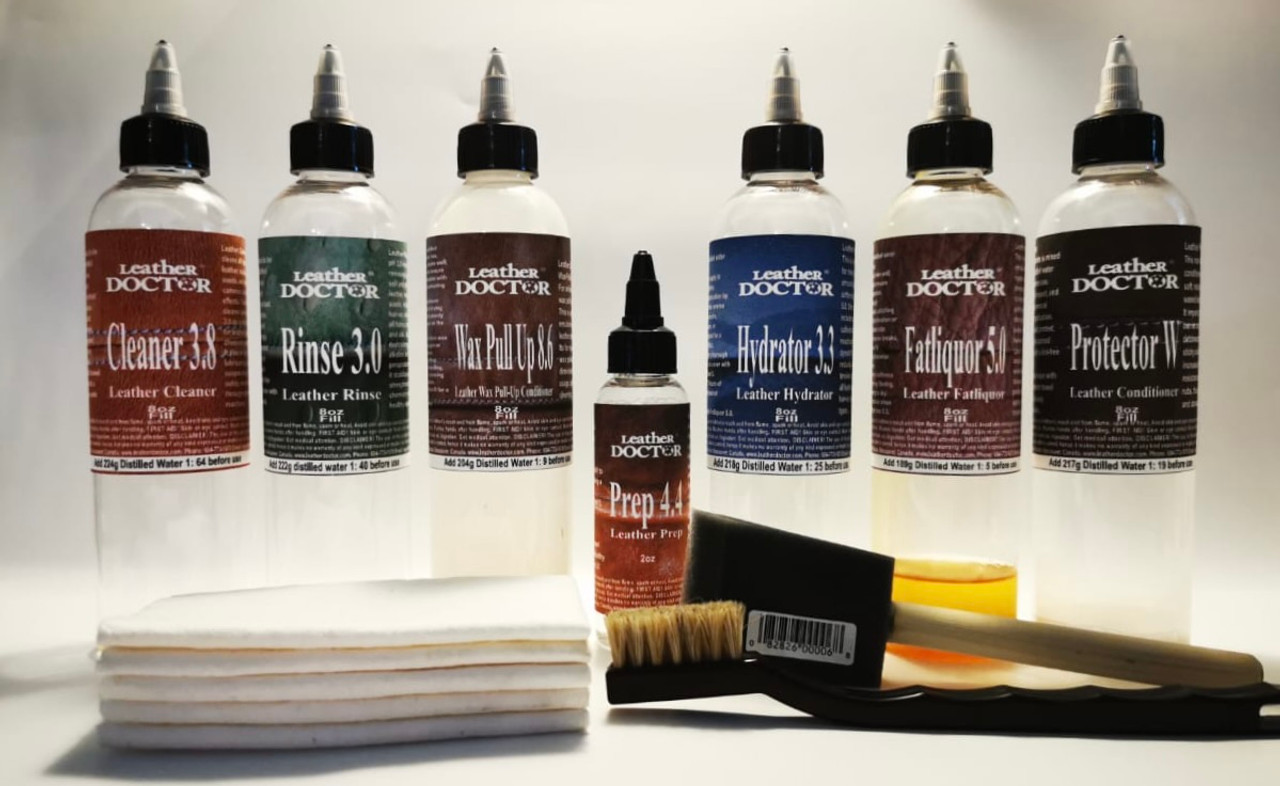










Wax Pull Up Leather Care Kit RW3

$64.95 - $168.95
(1 review) Write a Review
Weight:
0.715 KGS
Shipping:
Calculated at Checkout
Adding to cart… The item has been added

 Wax Pull-Up Leather Cleaner and Conditioner Kit RW3 by Leather Doctor® is a complete Leather-Safe™ care system engineered to clean, rinse, hydrate, soften, revive, and condition aniline wax pull-up leather—restoring its original beauty, comfort, and signature pull-up effect.

  • Designed for both preventive care and deep restoration, Kit RW3 addresses surface soiling, internal fiber dehydration, and wax depletion without compromising the leather’s natural character.

  Why Choose Kit RW3?

✅ Preserves Appearance & Comfort

Performs preventive, routine, periodic, and restorative care, keeping wax pull-up leather visually rich, supple, and comfortable to the touch.

✅ Designed for Luxury Furniture

Ideal for Restoration Hardware® wax pull-up collections, including Lancaster, Maxwell, and Brompton sofas, as well as other premium aniline wax pull-up leathers.

✅ Revives the Authentic Pull-Up Effect

Restores the hallmark lighter color shift when stretched and the deep, waxy glow when warmed and rubbed, true to original tannery intent.

✅ Prevents Dryness & Cracking

  • Hydrator 3.3 relaxes and reopens leather fibers
  • Fatliquor 5.0 replenishes essential fats and oils
Together, they restore flexibility, tensile strength, and long-term resilience.

 Understanding Wax Pull-Up Leather

Unique Aging Characteristics

Wax pull-up leather relies on internal wax conditioners (Wax 8.6) and primary fat liquors (Fatliquor 5.0). Over time, these components evaporate or migrate, reducing pull-up contrast and softness.

Sensitivity to Heat & UV

Sunlight, fireplaces, heaters, and warm environments accelerate dehydration—leading to stiffness, dullness, and eventual cracking.

Why Proper Care Matters

Regular hydration, fatliquoring, and surface conditioning prevent premature aging, preserving suppleness and visual depth.


Leather Doctor® Care System Explained

 Preventive Care System

A preventive system begins with Protector W, applied before regular use to:

  • Impart a luxurious waxy hand feel
  • Create a non-stick surface that resists soiling
  • Reduce friction noise and friction wear
  • Optionally diffuse a classic leather scent for enhanced sensory appeal

 Routine Care System

Routine care includes:

  • Dusting and spot attention
  • pH-balanced cleaning to neutralize alkaline sweat
  • Non-stick, rub-resistant conditioning after rinsing

This prevents tackiness, dullness, and premature wear while maintaining a healthy leather surface.


 Periodic Care System

Periodic care is recommended before soiling damages the finish:

  • Maintains consistent cleanliness and fiber health
  • High-contact areas (headrests, armrests, handles) require more frequent attention than low-use zones

 Restorative Care System

The restorative system is the ultimate salvage and revival process, removing:

  • Embedded body oils and sweat
  • Aged conditioners and wax buildup
  • Crease-packed soiling often mistaken for cracks

This system restores both appearance and structural integrity.


 Kit RW3 – Product Contents

Available Sizes: 4 oz / 8 oz / 16 oz fills
(Concentrates – dilution required with distilled water only)

Approximate Water Required Per Kit Size

✅ 4 oz → 0.7 quart
✅ 8 oz → 1.4 quarts
✅ 16 oz  → 3.4 quarts
Shake well before use

 Size included in the Kit

Click the link for details:

✅ Prep 4.4 - 1 / 2 / 4
✅ Soft 3.8 - 4 / 8 / 16
✅ Rinse 3.0 - 4 / 8 / 16
✅ Hydrator 3.3 - 4 / 8 / 16
✅ Fatliquor 5.0 - 4 / 8 / 16
✅ Wax 8.6 - 4 / 8 / 16
✅ Protector W - 4 / 8 / 16
✅ Brush 1 
✅ Foam 2 
✅ Towel 5  


 Step-by-Step Instructions

1️⃣ Prepping

  1. Apply Prep 4.4 thinly to heavily soiled areas.
  2. Work with Brush 1 (horsehair).
  3. Extract suspended soiling with a towel until it shows clean.
  4. Proceed with general cleaning using Soft Cleaner 3.8.

2️⃣ Cleaning

  1. Dilute Soft Cleaner 3.8 (1:32) with distilled water.
  2. Apply and brush gently.
  3. Extract suspended soiling with a dry absorbent towel.
  4. Proceed to rinsing.

3️⃣ Rinsing

  • Dilute Rinse 3.0 (1:40) with distilled water.
  • Apply, brush, and extract residues with a towel.
  • Leather is now ready for hydration.

4️⃣ Hydrating

  • Dilute Hydrator 3.3 (1:25) with distilled water.
  • Apply generously for an even, deep saturation.
  • Massage and stretch leather back to dimension.
  • Proceed directly to fatliquoring.

5️⃣ Fatliquoring

  1. Dilute Fatliquor 5.0 (1:5) with distilled water.
  2. Apply evenly, redistributing as water evaporates.
  3. Repeat until absorption stops.
  4. Allow natural drying.
  5. Rinse any dried tacky residue with Hydrator 3.3.
  6. For extra softness, lightly re-hydrate, stake, massage, or flex during drying.

6️⃣ Pull-Up Effect Conditioning

  1. Dilute Wax 8.6 (1:9) with distilled water.
  2. Apply evenly with a horsehair brush to achieve uniform darkening.
  3. Allow up to 8 hours of natural drying until crystalline wax appears.
  4. Activate with gentle heat (hairdryer or blower) to reveal natural gloss.

Optional Enhancements:

  • Gloss 76 for higher sheen
  • Leather Buttery Feel Conditioner B for non-stick, rub-resistant protection

7️⃣ Surface Conditioning

  1. Dilute Protector W (1:19) with distilled water.
  2. Shake well.
  3. Mist lightly and spread evenly with brush or pad.
  4. Ready for use once dry.
  5. During routine maintenance, wipe with a lint-free white towel to lift surface soiling simultaneously.

 People Also Ask:

  1. How to Identify Leather Stains?
  2. How to Use Aniline Pull-up Leather Problem Matrix?
  3. Technical Help and Support?

How to Identify Leather Stains?

Stain identification is crucial for effective treatment and is based on six key factors:
Appearance, Odor, Color, Feel-of-Hand, Location, and Buildup or Absorption.

1. Appearance

  • Observing how the stain looks can indicate whether it is a spill, rub-on, penetration, or surface deposit.
  • Some stains may cause dye or finish damage, revealing changes in the leather’s color or texture.

2. Odor

  • Smelling the stain can help identify its source.
  • Common odors include:
    • Moldy (fungal growth)
    • Smoke (fire or cigarette exposure)
    • Putrid (decaying organic matter)
    • Ammonia (urine contamination)

3. Color

  • Color provides a clue to the staining substance but can change over time due to oxidation.
  • The leather’s natural color may also influence how the stain appears.
    • Red stains: Could be from wine, blood, lipstick, nail polish, or beverages.
    • Blood stains: Can oxidize and shift from red to tan, then to black.

4. Feel-of-Hand

  • Touching the stain helps determine its type:
    • Sticky: Likely from candy, beverages, or sugary substances.
    • Brittle and stiff: Could be nail polish, paint, or shellac.
    • Greasy smear: Often caused by lipstick, oils, or butter.

5. Location

  • The stain’s location on the leather provides hints about its origin.
    • Headrests & armrests: Usually stained by body oil, sweat, and grease.
    • Seat cushions: Often show food or beverage spills.

6. Buildup or Absorbed?

  • Stains can be surface-level (built-up) or deeply absorbed into the leather.
    • Built-up stains (common on pigmented leather) include paint, food residue, and ink.
    • Absorbed stains (common on nubuck, aniline, and unfinished leather) include wine, tea, and coffee.
    • Combination stains: Some stains contain both absorbed and surface elements, such as lipstick, ink, and mustard.
    • Protein-based stains: Examples include blood, dairy, and egg-based spills.
    • Oil-based stains: Often come from grease, butter, and lotions.
    • Colloidal stains: May require specialized treatments.

7. Additional Considerations:

  • Sweat stains can chemically alter leather, causing tackiness (when dry) or sliminess (when wet).
  • Dye stains may show up when wiping with a white towel—this indicates color crocking.
  • Fatliquor leaching (spew) appears as a milky film and causes leather to become stiff and prone to cracking.

By carefully identifying stains, you can apply the appropriate Leather Doctor® solutions to restore leather to its original beauty.
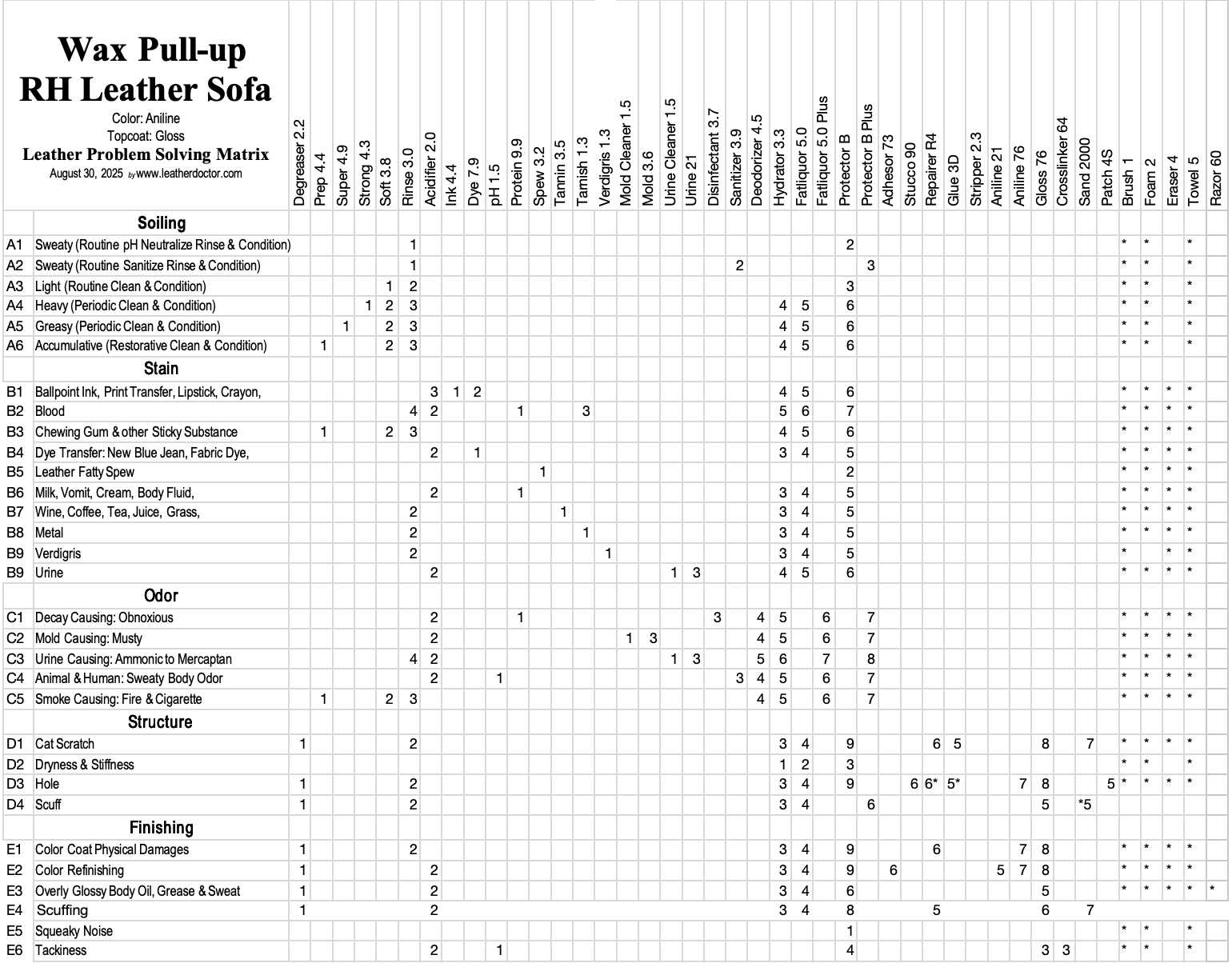
wax-pull-up-rh-leather-sofa.png

Wax Pull Up RH Leather Problem Solving Matrix?

How to Use Wax Pull Up RH Leather Problem Solving Matrix?

This matrix categorizes common issues with aniline leather into five groups:

  • Soil, Stain, Odor, Structure, and Finish (listed in the left column).
  • Corresponding recommended products are displayed across the top row.
  • Each number within the matrix indicates the steps required to address the problem holistically.

For example:

  • If a leather issue involves an unknown compound that combines soil, stain, and odor, follow the sequence across the matrix, combining necessary steps from each category.
  • The process should always conclude with
    • Hydrator 3.3 to rehydrate and relax the leather.
    • Fatliquor 5.0 to replenish lost fats and oils, restoring suppleness.
    • Protector W conditioning the leather for ongoing durability.

Technical Help and Support?

https://www.leathercleaningrestorationforum.com/forum/forumdisplay.php?57-Wax-Pull-up-Leather-Upholstery-Forum

 Your opinions, insights and review are precious and will help us to improve our writing and solve your leather problem more efficiently.

Updated: March 21, 2025 | June 24, 2025 |August 30, 2025 | February 2, 2026 by Roger Koh

1 Review Hide Reviews Show Reviews

  • 5
    Restoration Hardware Wax Pull-Up Leather care kit AW3

    Posted by Barbara Beck on 24th Mar 2021

    This kit is amazing! My 13 year old Restoration Hardware Leather Couch was starting to show its age thanks to heavy use and rambunctious dogs and it desperately needed some TLC. Which I found with this kit and the instructions I found in the support forum. I did have to add a bottle of Aniline Top 76G to the kit to get that final glossy coating. But I've learned a ton about this kind of leather and the several step process it takes to restore the cushions back to nearly new condition. I've been doing one cushion at a time and I've become obsessed with the process and how well they're turning out. Thank you Leather Doctor! Your products and advice are brilliant. And this sure beats trying to buy new cushions!