

How to Fix Sticky Bicast Leather Couch (Complete Guide)
Posted by Roger Koh on 22nd Mar 2026
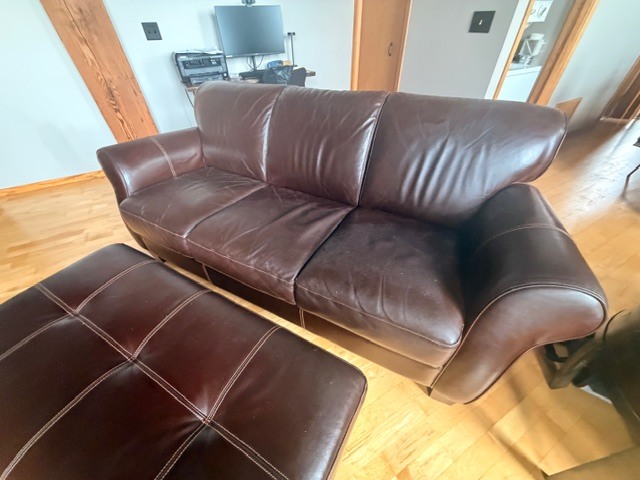
How to Fix Sticky Bicast Leather Couch (Complete Guide)
Sticky leather is one of the most frustrating problems with bicast furniture.
If your couch feels tacky, rubbery, or causes clothing to stick — you’re not dealing with dirt.
You’re dealing with polyurethane (PU) coating failure.
This guide explains:
- Why bicast leather becomes sticky
- How to identify the severity
- The correct step-by-step solution
What is Bicast Leather?
Bicast leather is made from split leather coated with a polyurethane (PU) layer and embossed for a uniform finish.
It offers:
- Consistent appearance
- Lower cost
- Easy maintenance
However, the PU coating is chemically sensitive and prone to deterioration.
⚠️ Why Does Bicast Leather Become Sticky?
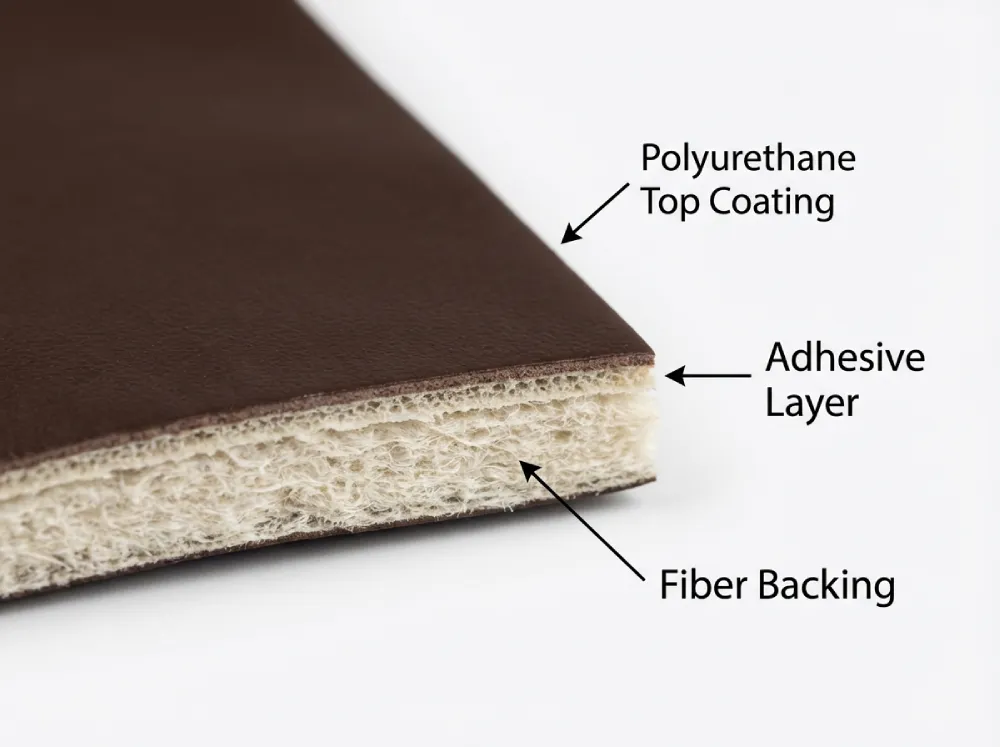
Sticky leather is caused by polyurethane breakdown, not surface dirt.
Main causes:
-
Body oils & sweat
Penetrate the coating and soften the surface -
Alkaline cleaners
Damage the protective structure -
Humidity (hydrolysis)
Breaks down polymer chains over time -
Plasticizer migration
Causes a gummy, sticky residue
Common Signs of Sticky Leather
- Tacky or rubbery feel
- Clothing sticking to the surface
- Dull or uneven appearance
- “Tape-like” sound when sitting
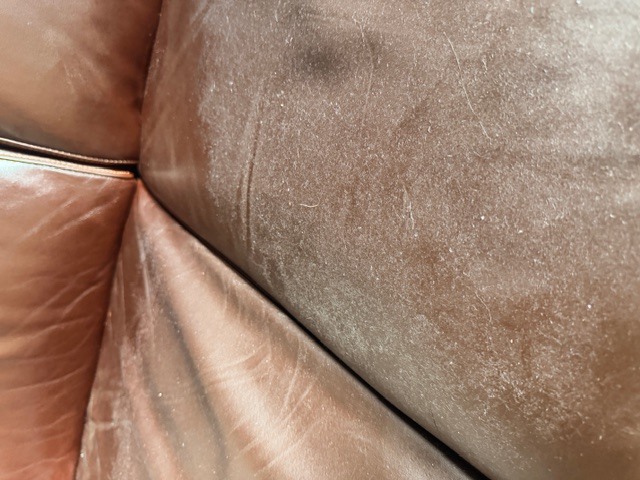
What Sticky Leather Looks Like?
"Sticky bicast leather often appears dull, uneven, and slightly hazy."
How Do You Fix Sticky Leather? (Quick Answer)
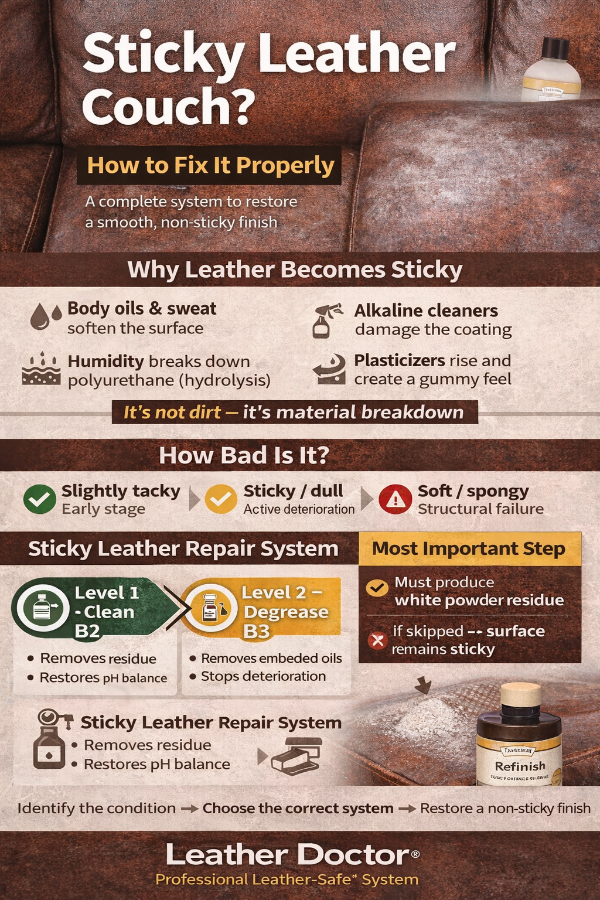
Sticky leather is fixed based on severity:
- Light stickiness: Clean and pH balance (B2 system)
- Moderate stickiness: Degrease to remove oils (B3 system)
- Severe stickiness: Remove and refinish topcoat (B7 system)
The key is removing degraded polyurethane before applying any new coating.
Step-by-Step: Choose the Right Solution
1️⃣ Level 1 – Light Stickiness (Early Stage)
If the surface feels slightly tacky or draggy:
✔ Use: Bicast Leather Sticky Cleaning Kit B2
What it does:
- Removes sweat and residue
- Restores proper pH balance
- Prevents further deterioration
Process:
- Clean with Sticky 1.5
- Rinse with Acidifier 2.0
- Apply Conditioner B
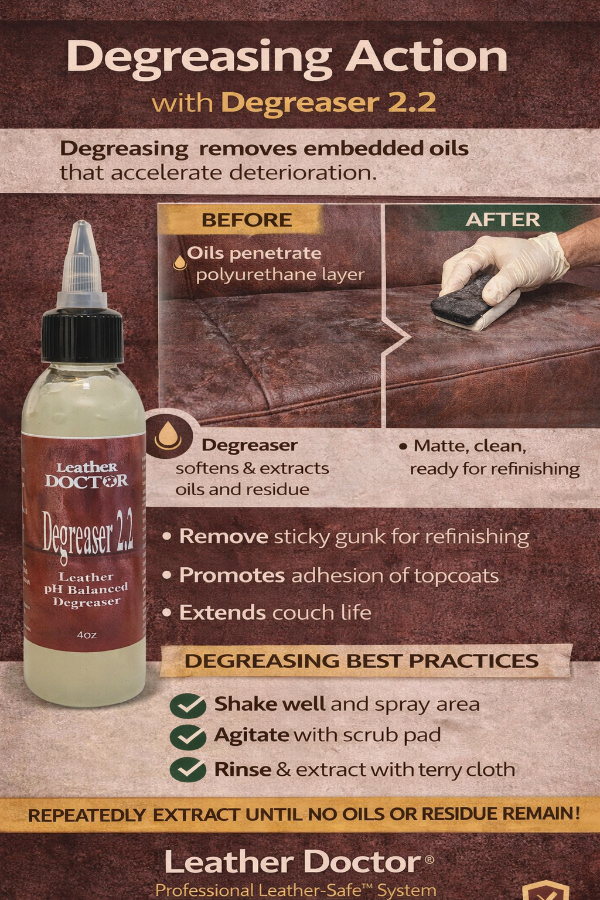
Degreasing Action
"Degreasing removes embedded oils that accelerate deterioration."
“If oils are not fully removed, the topcoat will not properly cure.”
2️⃣ Level 2 – Moderate Stickiness (Active Deterioration)
If the surface feels noticeably sticky or dull:
✔ Use: Bicast Leather Sticky Degreasing Kit B3
What it does:
- Removes embedded oils and grease
- Stops ongoing deterioration
- Stabilizes the coating
Process:
- Degrease with Degreaser 2.2
- Rinse with Acidifier 2.0
- Condition with Conditioner B
3️⃣ Level 3 – Severe Stickiness (Structural Failure)
If the surface feels soft, spongy, or “melting”:
✔ Use: Bicast Leather Sticky Topcoat Refinishing Kit B7
What it does:
- Removes deteriorated polyurethane
- Rebuilds a new crosslinked topcoat
- Restores a dry, smooth finish
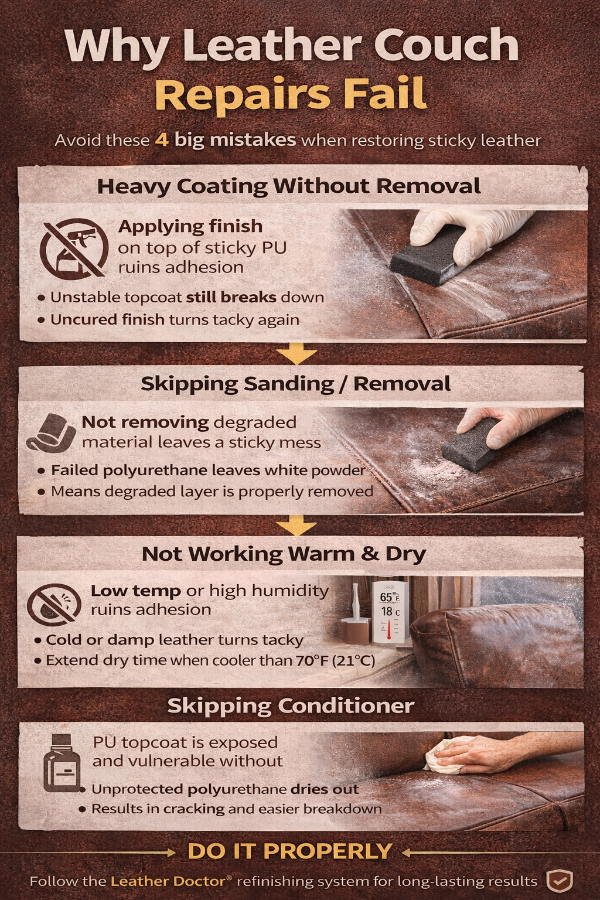
Buffering / Sanding (CRITICAL B7 STEP)
"Proper removal produces a fine white powder — this step is critical."
“If this white powder is not achieved, the surface may remain sticky even after refinishing.”
⚠️ Critical Step (Most Important)
You must remove the deteriorating topcoat using Buffer 3.
✔ This produces a fine white powder residue
✔ Ensures unstable material is fully removed
If skipped, the surface will remain sticky — even after refinishing.
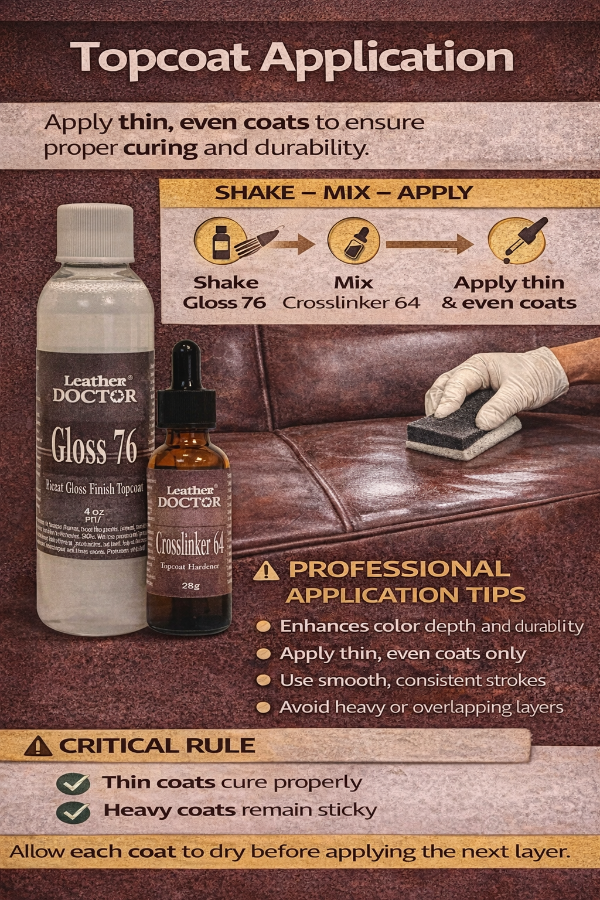
“Topcoat performance depends entirely on proper preparation and thin application.”
Topcoat Application
"Apply thin, even coats to ensure proper curing and durability."
Refinishing Process Overview
- Degrease and pH balance
- Remove deteriorated topcoat (Buffer 3)
- Apply crosslinked topcoat (Gloss 76 + Crosslinker 64)
- Condition for protection
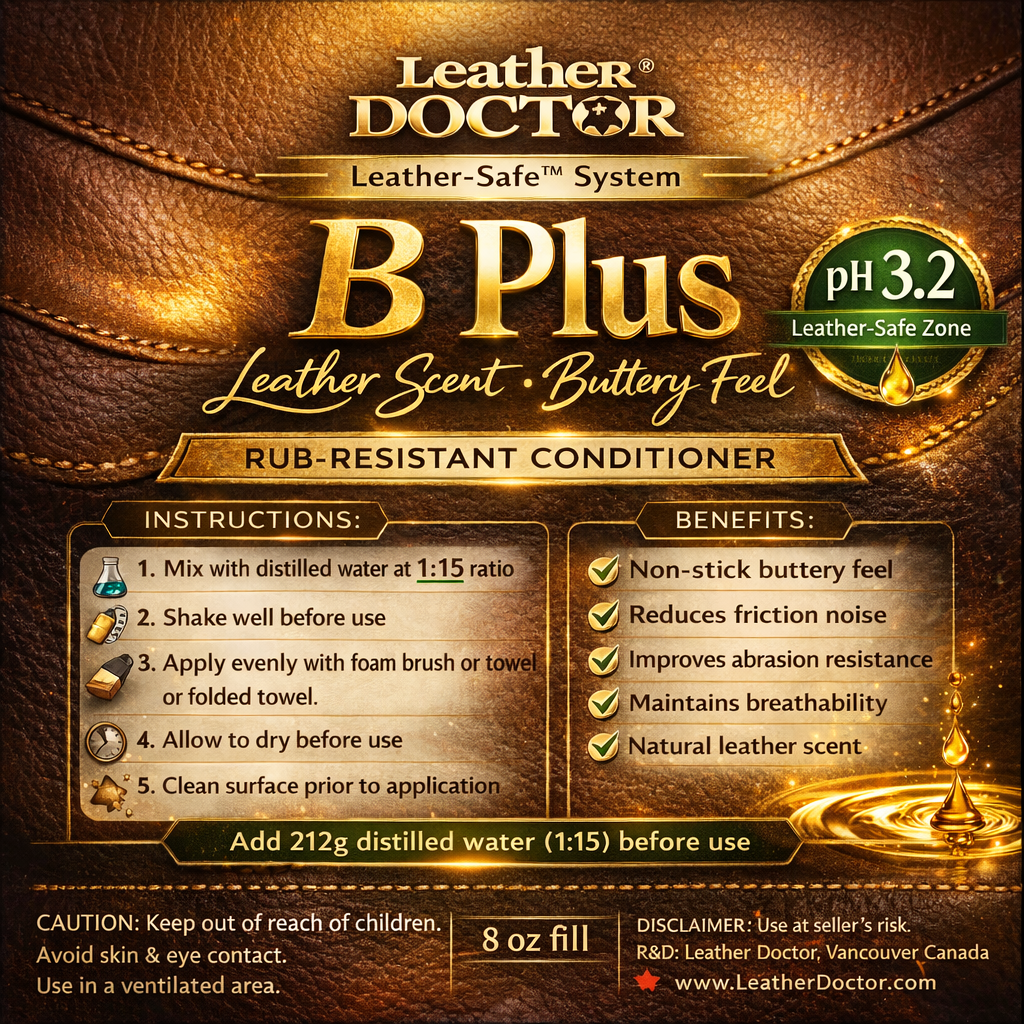
Final Result
"A properly restored surface should feel smooth, dry, and non-sticky."
Sticky Leather Repair System (Visual Guide)
This quick visual guide shows how to identify and fix sticky bicast leather based on severity.
How to Prevent Sticky Leather from Coming Back
After repair, maintain with:
✔ Bicast Leather Cleaning System (B2)
Regular maintenance:
- Removes sweat and oils
- Maintains pH balance
- Prevents recurrence
❌ Common Mistakes to Avoid
- Applying heavy coatings
- Skipping the sanding/removal step
- Not allowing proper drying time
- Working in cold or humid conditions
Final Insight
Sticky bicast leather is not a cleaning issue.
It is a material-deterioration issue that requires the appropriate level of treatment.
- Clean when it’s early
- Decrease when it progresses
- Refinish when the structure fails
Recommended Systems
- B2 – Cleaning & Prevention
- B3 – Degreasing & Stabilization
- B7 – Full Refinishing Restoration
FAQ
Can sticky leather be fixed permanently?
Yes — if the deteriorated polyurethane layer is properly removed and replaced.
Why does my leather feel sticky after cleaning?
Cleaning alone does not remove degraded polyurethane or embedded oils.
Can I just apply a new coating?
No — coating over unstable material will remain sticky.
✍️ Author
Roger Koh
Leather Doctor®