
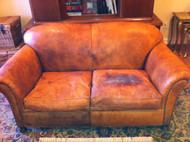
How to Identify Leather Stains
Posted by Roger Koh on 5th Feb 2026
A Practical Guide to Accurate Stain Diagnosis
Correct stain identification is the foundation of successful leather cleaning and restoration. Treating a stain without understanding its nature can spread the damage, set the stain permanently, or compromise the leather’s structure.
At Leather Doctor®, stain identification is guided by six key diagnostic factors:
Appearance · Odor · Color · Feel-of-Hand · Location · Buildup vs. Absorption
Understanding these indicators allows you to select the correct Leather-Safe™ solution and restore leather safely and effectively.
1. Appearance: What the Stain Looks Like
Visual inspection reveals how the stain interacts with the leather:
-
Spills – Often circular or irregular with softened edges
-
Rub-on stains – Smudged or smeared patterns from transfer (ink, dye, lipstick)
-
Penetration stains – Darkened areas where liquids have soaked in
-
Surface deposits – Crusted or layered residue sitting on top of the finish
Some stains may also damage dyes or finishes, causing:
-
Color loss or darkening
-
Texture changes
-
Exposed leather fibers
These visual cues help determine whether cleaning alone is sufficient or if refinishing is required.
2. Odor: What the Stain Smells Like
Odor is often the most overlooked but most revealing diagnostic tool.
Common odor indicators include:
-
Moldy – Fungal growth or prolonged moisture exposure
-
Smoky – Fire damage or cigarette exposure
-
Putrid – Decomposing organic matter
-
Ammonia-like – Urine contamination
Persistent odors usually indicate deep absorption, requiring decontamination rather than surface cleaning.
3. Color: What the Stain Reveals Over Time
Color offers important clues—but must be interpreted carefully.
-
Stain colors may change over time due to oxidation
-
The leather’s base color can alter the stain’s appearance
Examples:
-
Red stains – Wine, blood, lipstick, nail polish, or beverages
-
Blood stains – Often oxidize from red to tan, then dark brown or black
Color alone is never conclusive, but combined with other factors, it narrows the diagnosis.
4. Feel-of-Hand: What the Stain Feels Like
Touch tells you how the contaminant behaves:
-
Sticky or tacky – Sugary substances, candy, beverages
-
Brittle or stiff – Nail polish, paint, shellac
-
Greasy smear – Lipstick, oils, butter, lotions
Changes in flexibility or softness may also indicate internal chemical damage, not just surface contamination.
5. Location: Where the Stain Appears
The stain’s position often points directly to its source:
-
Headrests & armrests
-
Body oil
-
Sweat
-
Hair products
-
-
Seat cushions & seating panels
-
Food spills
-
Beverage stains
-
Grease transfer
-
Repeated contact zones are more prone to combination stains and structural damage.
6. Buildup or Absorbed? Understanding Stain Depth
Knowing whether a stain sits on the leather or penetrates into it determines the treatment approach.
Built-Up (Surface) Stains
Common on pigmented or finished leather:
-
Paint
-
Food residue
-
Ink
Absorbed Stains
Common on nubuck, aniline, and unfinished leather:
-
Wine
-
Tea
-
Coffee
Combination Stains
Contain both surface and absorbed components:
-
Lipstick
-
Ink
-
Mustard
Stain Type Categories
Certain stains require specialized treatment strategies:
-
Protein-based stains
-
Blood
-
Dairy
-
Egg-based spills
-
-
Oil-based stains
-
Grease
-
Butter
-
Lotions
-
-
Colloidal stains
-
Complex mixtures that may require staged treatments
-
Additional Diagnostic Considerations
-
Sweat stains
-
Can chemically alter leather
-
Cause tackiness when dry
-
Feel slimy when wet
-
-
Dye transfer (crocking)
-
Detected when wiping with a white towel
-
Indicates unstable dyes, not surface dirt
-
-
Fatliquor leaching (spew)
-
Appears as a milky or cloudy film
-
Leads to stiffness and cracking if untreated
-
Why Proper Stain Identification Matters
Every stain tells a story. When properly identified, you can:
-
Prevent permanent damage
-
Avoid spreading contaminants
-
Select the correct Leather Doctor® Leather-Safe™ solution
-
Restore softness, color, and longevity
Diagnosis always comes before treatment.
With careful observation and the right system, leather can often be restored to its original beauty—safely and successfully.