
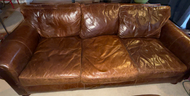
How to Gloss Topcoat Refinishing Restoration Hardware Aniline Wax Pull-Up Lancaster Sofa, Loveseat & Ottoman?
Posted by Roger Koh on 8th Feb 2026
Restoration Hardware’s Lancaster aniline wax pull-up leather is prized for its rich color depth, natural markings, and living patina. After 15–20 years of use, however, even well-cared-for pieces can begin to look tired—showing creases, looseness, uneven gloss, and darkened areas.
This article explains what’s really happening to the leather, why gloss topcoat refinishing must be done after internal restoration, and what you should realistically expect before and after using a proper leather-safe system.
Understanding the Condition of Aged Aniline Wax Pull-Up Leather
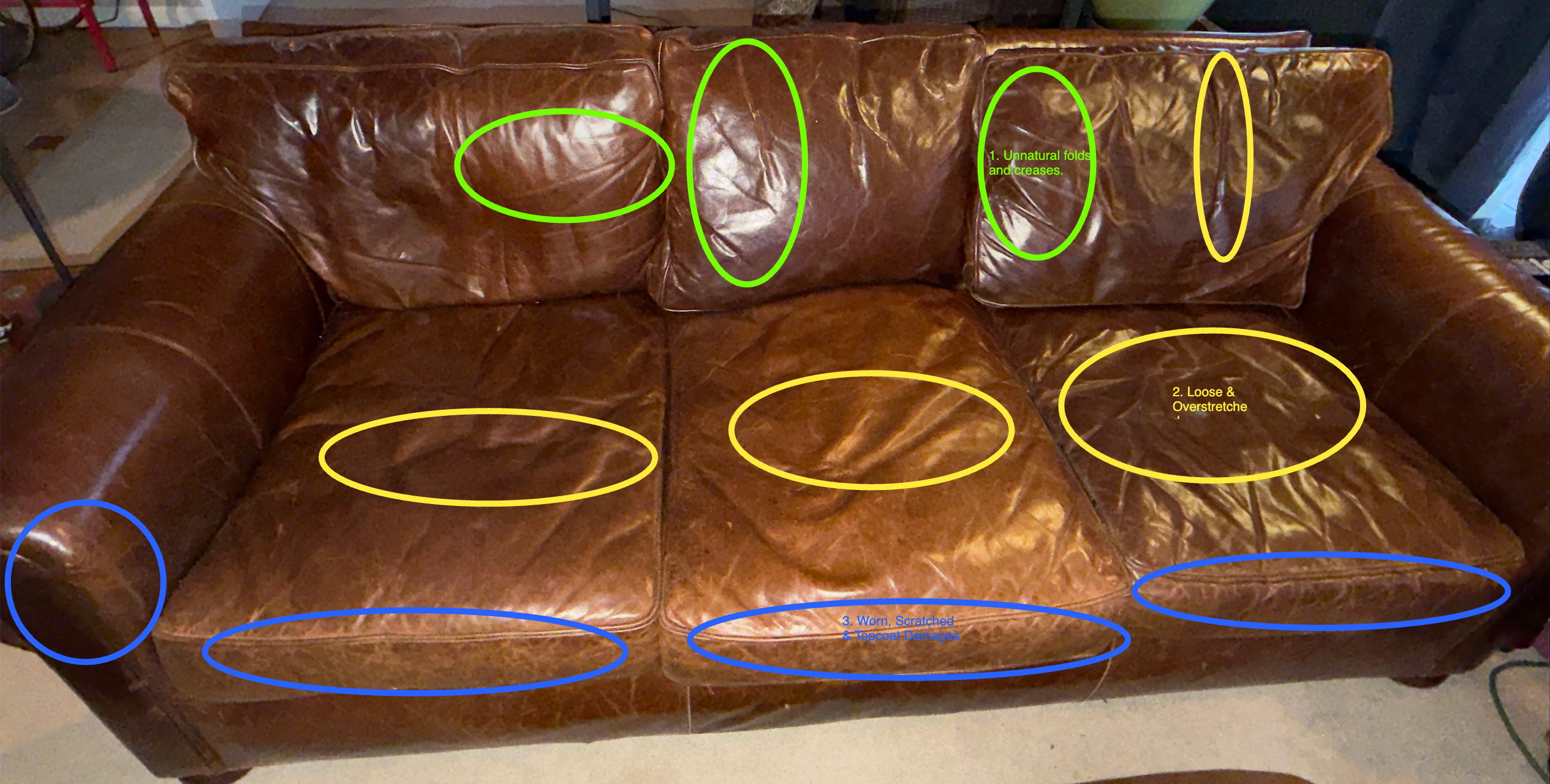
Based on real-world visual assessments of a 20-year-old Restoration Hardware Lancaster sofa, loveseat, and ottoman, the leather typically shows age-related fatigue rather than neglect.
Common Issues Observed
-
Unnatural folds and sharp creases
These are signs of internal dryness and fiber stiffness—not surface wrinkles. -
Loose and overstretched seating areas
Occur when leather loses its internal fat and oil content, allowing the fiber structure to relax and collapse. -
Worn, scratched, and uneven gloss
High-contact areas show partial topcoat loss and surface abrasion. -
Darkened areas on ottomans and seat cushions
Usually caused by long-term absorption of body oils and contaminants.
At this stage, the leather may still look attractive from a distance but is internally depleted and structurally fatigued.
Why Gloss Topcoat Refinishing Alone Is Not Enough
Many owners search for a “topcoat” solution expecting gloss refinishing to solve the problem. However, applying a gloss finish without restoring leather health first often leads to poor adhesion, uneven appearance, and premature failure.
That’s why the Leather Doctor® Wax Pull-Up Leather Topcoat Refinishing Kit AW6.tc is designed as a complete restoration system, not just a cosmetic coating.
What Happens During Proper Restoration
Leather restoration must work from the inside out.
1. Hydration & Fatliquoring – Restoring Leather Health
Leather is healthiest when it contains approximately 14% fatliquor (fat and oil) from the tannery. Over time, these volatile components evaporate and migrate out.
This results in:
-
Stiffness
-
Sharp, unnatural creases
-
Coarse breaks
-
Loss of elasticity
Hydrator 3.3 relaxes hardened fibers, while Fatliquor 5.0 replenishes lost oils—the lifeblood of leather.
For wax pull-up leather, Wax Pull-Up Conditioner 8.6 restores depth, movement, and the characteristic color shift.
? Heavily used areas absorb more product, which is why consumption varies across cushions and pieces.
2. Degreasing, Rinsing & pH Correction
Before refinishing, the leather must be properly prepared:
-
Embedded body oils are reduced
-
Darkened areas may lighten and blend better
-
Surface tension and pH are corrected so finishes bond evenly
This step is essential for long-term durability of any gloss topcoat.
3. Gloss Topcoat Refinishing
Once the leather is internally healthy and surface-prepared, Aniline Finish Topcoat Gloss 76 is applied to:
-
Even out gloss between worn and intact areas
-
Visually unify the furniture
-
Protect the restored surface
A final conditioning step leaves the leather soft, smooth, and non-sticky, not plasticky or sealed.
Before–After Expectations: What Results Are Realistic?
What You Will See After Restoration
✔ Creases look softer and more natural, not sharp or cracked
✔ Gloss appears even and balanced, not patchy
✔ Darkened areas show noticeable improvement, though not complete erasure
✔ Scratches and wear are visually minimized, not artificially hidden
✔ Leather feels supple, relaxed, and resilient
What Will Not Happen
✘ Leather will not look brand new or factory-tight
✘ Deep structural stretch marks may not disappear completely
✘ Natural patina and character will remain—by design
Why Start with the Loveseat First?
Leather absorbency and fatigue vary by piece and usage history. For this reason, Leather Doctor® recommends starting with the loveseat using the AW6.tc system, completing the full process before moving on.
This allows you to accurately determine:
-
How much hydration and fatliquor the leather consumes
-
Whether additional Hydrator 3.3 or Fatliquor 5.0 is required
-
What’s needed to bring the sofa and ottoman to the same standard
The True Goal of Gloss Topcoat Restoration
The goal is not to erase history, but to return the leather to a healthy, supple, and visually balanced condition, extending its life while preserving its authentic wax pull-up character.
When done correctly, gloss topcoat refinishing becomes the final refinement—not a cover-up.
Related Products:
Google “People Also Ask” (PAA)
- Can an aniline wax pull-up leather sofa be refinished?
- Why does my Restoration Hardware leather sofa look loose and wrinkled?
- Will gloss topcoat make my leather sofa look new again?
- What is fatliquoring in leather restoration?
- How much leather restoration product do I need for a sofa set?
Can an aniline wax pull-up leather sofa be refinished?
Yes. Aniline wax pull-up leather can be refinished only after proper hydration, fatliquoring, and pH correction. Refinishing without restoring internal leather health may cause uneven gloss, poor adhesion, and premature finish failure.
Why does my Restoration Hardware leather sofa look loose and wrinkled?
Loose seating and sharp creases occur when leather loses its internal fat and oil over time. This causes fiber fatigue, overstretching, and unnatural folds—not just surface wear.
Will gloss topcoat make my leather sofa look new again?
No. Gloss topcoat refinishing evens appearance and restores balance, but it does not make leather factory-new. Natural patina, character, and some stretch marks will remain by design.
What is fatliquoring in leather restoration?
Fatliquoring replenishes the fats and oils that keep leather flexible and strong. Without proper fatliquoring, leather becomes stiff, creases sharply, and continues to deteriorate—even if the surface looks clean.
How much leather restoration product do I need for a sofa set?
Product usage depends on leather absorbency and wear. Heavily used areas consume more hydrator and fatliquor. Starting with one piece (such as a loveseat) helps determine total product needs accurately.